

Video games let us do things we would never attempt in real life. In Grand Theft Auto VI, players can make choices that shape their characters and the story. One reported choice comes during a gym sequence: Lucia is offered steroids, and accepting them changes her muscle rating and physique for the rest of the game. That puts a woman’s use of anabolic steroids directly into the player’s hands.
That detail deserves attention. Women are often left out of casual conversations about performance-enhancing drugs, even though women use them too—and can face distinct risks. Seeing a female protagonist offered steroids may introduce some players to the idea that these drugs are used by women to build muscle or change their appearance. It may also reinforce the impression that steroids are a straightforward way for a woman to become stronger or more muscular.

Anabolic steroids are drugs related to testosterone. Some have legitimate medical uses, but using them without medical supervision to build muscle or improve performance can harm health. Risks include high blood pressure, changes in cholesterol, heart problems, liver or kidney damage, mood changes, and effects on fertility and the body’s own hormone production. The risks vary with the drug, dose, duration, and person using it.
There is also an important distinction: “steroids” is an umbrella term. Anabolic steroids are not the same as corticosteroids, which are commonly prescribed for inflammation and other medical conditions. A game may use the familiar word without explaining that difference—or identifying the substance its fictional character is taking. Players may be left with a vague impression that all steroids are alike, or that performance drugs are just another kind of supplement.


In real life, anabolic steroids can cause effects that go beyond muscle growth. For women, misuse may lead to menstrual changes, increased facial or body hair, acne, hair loss, and a deeper voice. Some physical changes may not fully reverse after stopping. These risks can be especially important for someone who has not been told what a drug is, how it can affect the body, or why medical supervision matters.
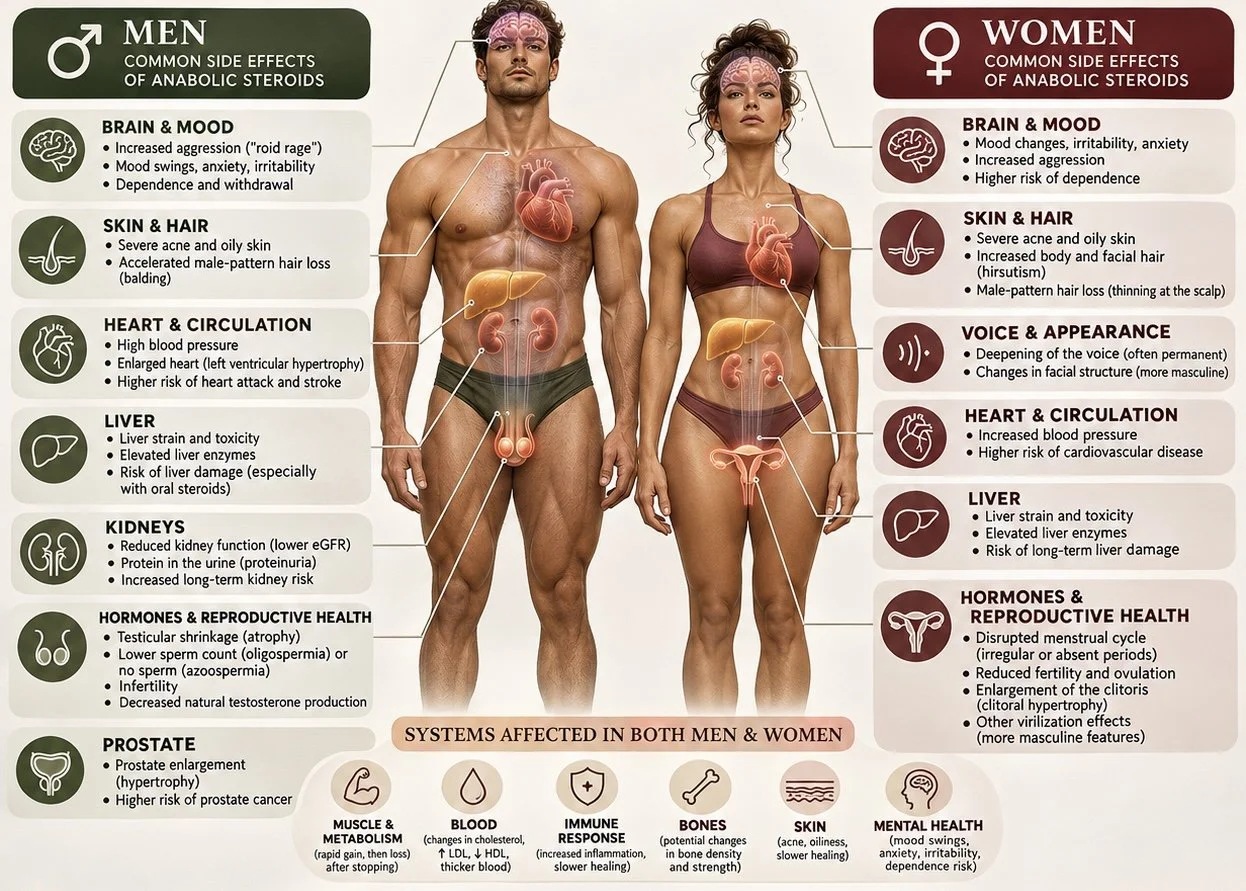
The concern is not that a video game automatically causes someone to use steroids. We should be careful not to make that claim. The concern is how a drug is framed. If steroids appear mainly as a quick route to a more muscular character or a gameplay advantage, the story can make their use seem simple, predictable, and rewarding. Real life is far less straightforward.
For younger players in particular, Lucia’s choice can be a useful opening for conversation. Parents and caregivers do not need to lecture or assume a player is at risk. They can ask:
What did you think the drug did in the game?
Did you notice any downsides?
Do you think the effects would be the same for a woman in real life?
Those questions can lead to a broader discussion about body image, pressure to look a certain way, online fitness claims, and the difference between a fictional transformation and a real drug’s effects.
A story can portray drug use without endorsing it. But when a drug functions like a power-up—especially for a woman character—it may help to give players context about the real-world risks and the range of possible effects. As a sports pharmacist, I believe education should meet people where they are, including in the games they enjoy.
The goal is not to shame gamers or treat every depiction as dangerous. It is to make sure that when a powerful drug appears to offer an easy advantage, players also have a chance to understand what that choice could mean in real life. A character can accept steroids with a button press. A person’s health is not that simple.