The Serena Williams Effect: What GLP-1 Therapy Means for Athletes, Body Composition, and Sports Performance
From Diabetes Drug to Weight-Loss Phenomenon
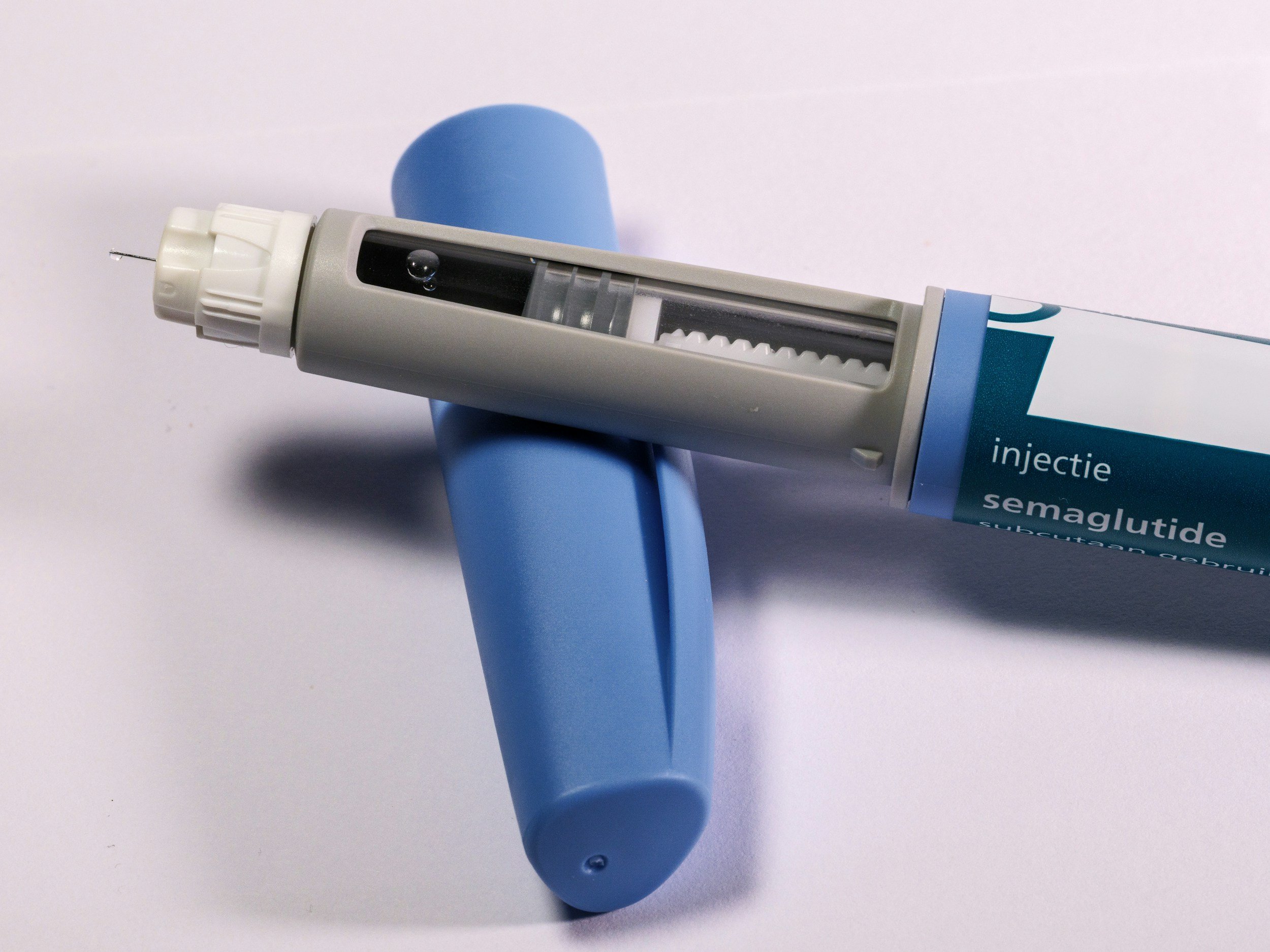
The world we live in today is clearly changing. The use of medications to improve lives has been a contentious issue when viewed through the lens of transformation. GLP-1s are leading the way. The first GLP-1 medication, Exenatide (Byetta), was introduced for type 2 diabetes in 2005, hence GLP-1s are not at all new to the market. In 2017, semaglutide (Ozempic) obtained an approval for use in the treatment of type 2 diabetes; however, this medicine gained it popularity due to its weight-loss advantage. Highlighting the attributes of weight loss Wegovy, Semaglutide, was approved in 2021 specifically for weight loss.
Currently, we have dual GLP-1/GIP receptor agonists like Mounjaro for type 2 diabetes and Zepbound (Tirzepatide) for weight loss. Both common people and celebrities have praised GLP-1 for its ability to help with weight loss, hunger control, blood sugar regulation, enhanced vitals, and improved cardiovascular health.
Why Serena’s Story Matters
What is the level of acceptance when professional athletes voluntarily incorporate GLP-1s into their everyday regimen? Since the birth of her two children, Serena Williams, the first active elite athlete to publicly reveal that she uses a GLP-1, has been incredibly vocal about how using one has improved her general health and allowed her to reach her weight loss goals.
Serena Williams' decision to publicly discuss GLP-1 therapy represents more than a celebrity health story. It highlights a growing conversation surrounding the use of weight-management medications among physically active individuals and raises important questions about body composition, nutrition, muscle preservation, and athletic performance.
The “Serena Williams Effect” reflects a new era in sports medicine. GLP-1 therapy may reshape how athletes approach body weight and composition. While these medications can promote substantial weight loss and metabolic benefits, their impact on lean muscle, fueling, recovery, and ultimately athletic performance remains an important question for elite sport.
How Tirzepatide Works in the Body
Beyond weight loss what are GLP-1’s physically doing to the body. Unlike medications that target only the GLP-1 receptor, tirzepatide (Zepbound) activates both the glucose-dependent insulinotropic polypeptide (GIP) and GLP-1 receptors. This dual mechanism is important because the two pathways work together to influence appetite, food intake, glucose metabolism, and body weight.
Tirzepatide increases glucose-dependent insulin secretion, improves insulin sensitivity, reduces glucagon secretion, and decreases calorie intake through effects on appetite. It also delays gastric emptying, which can contribute to increased satiety.
For athletes, the significance goes beyond weight loss. Tirzepatide produces greater reductions in fat mass than lean mass, but some lean-mass loss can still occur. This distinction is critical for elite athletes, whose performance depends on maintaining muscle, adequate energy availability, and proper fueling. For athletes, losing weight is only half the story; the real question is what is being lost and whether the changes in fat and lean mass ultimately help or hinder performance.
Body Composition: What’s Actually Being Lost
Weight loss is not a sufficient indicator of the effectiveness of GLP-1/GIP therapy for elite athletes. The balance between lean and fat mass, or body composition, is significantly more significant. Mobility, metabolic health, and, in some sports, the power-to-weight ratio may all be improved by reducing extra fat mass. But for athletes like Serena in tennis who rely on muscle mass for strength, power, stability, and performance, the quality of that weight loss is very crucial. Recent research helps put this into perspective. Eisa and Barood et al. (2026) reviewed more than 15,000 people and found that about 25–39% of the weight lost while using incretin medications came from lean mass, which includes muscle and other non-fat tissue. With tirzepatide specifically, about 25% of the weight lost came from lean mass. This was similar to weight loss from lifestyle changes alone.
However, people who combined lifestyle changes with resistance training lost less lean mass, about 18% of their total weight loss. Similarly, Lopes Menezes et al. (2026) found that GLP-1-based therapies generally reduce body weight and body fat, but the effects on muscle size and quality are less clear. The researchers emphasized that losing lean mass does not automatically mean losing muscle or developing muscle weakness, but more research is needed. For athletes, this is an important distinction: losing body fat may be beneficial, but preserving muscle is essential for strength, power, recovery, and performance.
Fueling and Performance on a GLP-1
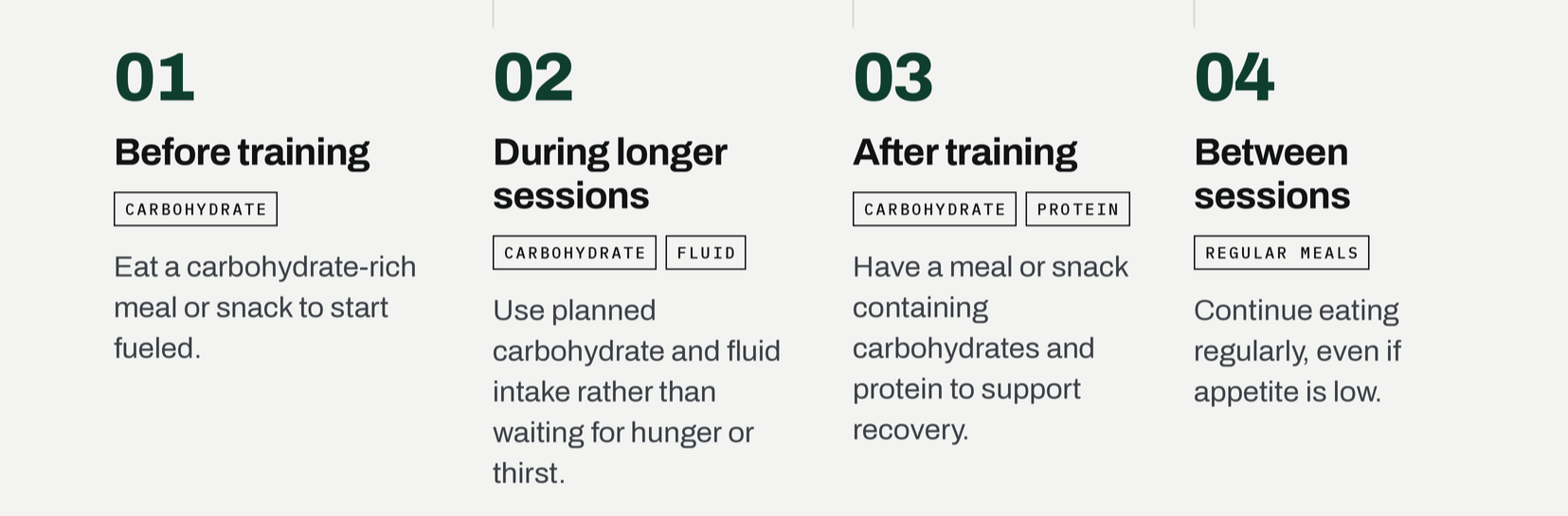
So what does GLP-1 use mean for athletic performance? For athletes, GLP-1 therapy may affect more than just body weight. Athletes need enough calories and carbohydrates to fuel workouts. If appetite is reduced, it may become harder to eat enough to support training. This is where “mechanical fueling” can help. Instead of waiting to feel hungry, athletes can plan their nutrition around their training schedule. Fuel by the clock, not merely by hunger.
Side Effects and What We Still Don’t Know
Gastrointestinal side effects of GLP-1s are a frequent cause for concern. The delayed emptying of the stomach can cause nausea and vomiting in athletes. Even though it's a transient adverse effect, athletes need to be aware of it before beginning this medicine.
The long-term effects of GLP-1 medication on athletes require further investigation. Muscle strength, power, endurance, recuperation, nutrition, and sport-specific performance should be the focus of future research. Athletes and medical professionals should concentrate on maintaining proper nutrition, protein consumption, hydration, and training while keeping an eye on performance until we have that evidence.
Are GLP-1s Allowed Under WADA Rules?
For competitive athletes, one important question is: Are GLP-1 medications allowed under WADA rules? Under the 2026 WADA infrastructure, semaglutide and tirzepatide are not on the prohibited list. However, WADA has placed markers of semaglutide and tirzepatide on its 2026 Monitoring Program for both in-competition and out-of-competition periods. What does that mean? WADA uses the program to monitor substances that are not prohibited but may warrant additional observation to identify potential patterns of misuse in sport. For athletes, this distinction is important. Being on the WADA monitoring list shows that WADA is paying attention to how these medications are being used in sport. As research continues, athletes, pharmacists, and medical professionals should continue to monitor WADA updates. The status of these medications could change as evidence and anti-doping policies evolve.
The Bottom Line: A Conversation, Not a Prescription
The Serena Williams Effect is less about Serena herself and more about what her public discussion of tirzepatide (Zepbound) represents for sports medicine. When an athlete or former elite athlete uses a modern weight-management medication, it raises important questions: Can losing weight improve movement? What happens to muscle? Can the athlete still meet the nutrition demands of training? Does a lighter body actually translate into better performance? And why are these medications even relevant to athletes without the presence of type 2 diabetes?
The answer is not simply found on the scale. Weight loss does not automatically equal better athletic performance. Body composition, muscle preservation, energy availability, protein intake, hydration, and recovery all matter. At the same time, athlete-specific research on GLP-1 therapy remains limited. Pharmacists can always help athletes navigate these questions while also understanding the current WADA Monitoring Program and medication safety. The Serena Williams Effect should start a conversation, not provide a prescription. For athletes, the goal should not simply be a lower number on the scale, but an evidence-based approach that supports health, preserves function, and optimizes performance.
Citations
Jastreboff, A. M., Aronne, L. J., Ahmad, N. N., Wharton, S., Connery, L., Alves, B., Kiyosue, A., Zhang, S., Liu, B., Bunck, M. C., & Stefanski, A. (2022). Tirzepatide once weekly for the treatment of obesity. The New England Journal of Medicine, 387(3), 205–216. https://doi.org/10.1056/NEJMoa2206038
Eisa, N., & Barood, O. (2026). Lean Mass Changes With Incretin Therapy Versus Lifestyle Intervention: A Systematic Review and Meta-Analysis of Randomised Controlled Trials. Diabetes, obesity & metabolism, 28(6), 4818–4827. https://doi.org/10.1111/dom.70666
Lopes Menezes, M. L., Güntzel Chiappa, M. E., Kloss, R. F., Tuesta, M., Santos, P., Sá Filho, A. S., & Chiappa, G. R. (2026). Body Composition Remodelling During GLP-1-Based Therapy: A Systematic Review and Meta-Analysis Using a Hierarchical Physiological Framework. Diabetes, obesity & metabolism, 10.1111/dom.71220. Advance online publication. https://doi.org/10.1111/dom.71220
World Anti-Doping Agency. (2025). 2026 monitoring program. WADA. WADA 2026 Monitoring Program