
The World Cup's Real Opponent: Dehydration in Soccer Athletes
Soccer players lose 2L of fluid an hour in World Cup heat. A sports pharmacist perspective on hydration, electrolytes, and preventing heat illness.
By Dr. Brandon Hockaday, PharmD, Founder & Clinical Director, Hockaday Rx
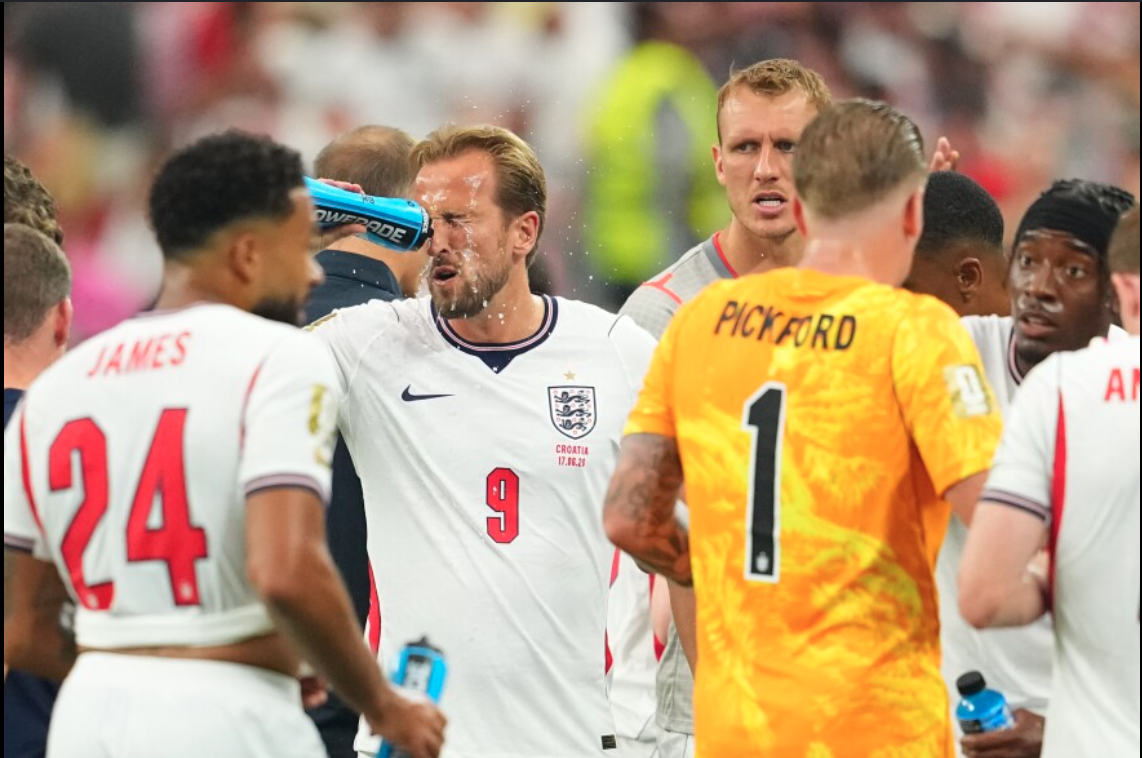
As the 2026 FIFA World Cup unfolds across the United States, Mexico, and Canada, the attention has gone exactly where you'd expect — the matches, the upstart nations, the star turns from Lionel Messi, Kylian Mbappé, Erling Haaland, and Harry Kane. The group stage has more or less lived up to the hype. But there's a second contest happening at every venue, one that doesn't show up on the scoreboard: the fight against dehydration and heat stress in soccer athletescompeting through the hottest weeks of a North American summer.
It's already a storyline. With matches running from the midday heat of Dallas, Houston, and Miami to the altitude of Mexico City, European sides have arrived with dedicated plans for beating the heat — and FIFA's mandatory cooling and hydration breaks are back in the spotlight. Some fans see those stoppages as an interruption to the rhythm of the game, especially during cooler evening kickoffs. From a sports medicine and sports pharmacy perspective, they're something else entirely: a frontline safeguard for athlete health and performance.
What's actually happening to a player's body
Soccer players routinely cover six to eight miles in a single match, stacking repeated high-intensity sprints, accelerations, and changes of direction on top of ninety-plus minutes of continuous effort. In hot, humid conditions, an athlete can lose more than two liters of fluid per hour through sweat. And it isn't just water leaving the body — it's the essential electrolytes that make muscles fire and nerves signal: sodium, potassium, and chloride.
Here's the part that should reframe how anyone watches these cooling breaks. Research has consistently shown that even a 2% loss in body weight from dehydration can measurably degrade aerobic performance, cognitive function, reaction time, and decision-making. For an elite player, that margin is everything. A half-step late to a counterattack, a blown defensive assignment, a set piece struck poorly — any of them can trace back to fluid loss the player may not even feel yet. The American College of Sports Medicine and peer-reviewed sports science literature have documented this performance cliff
for years.
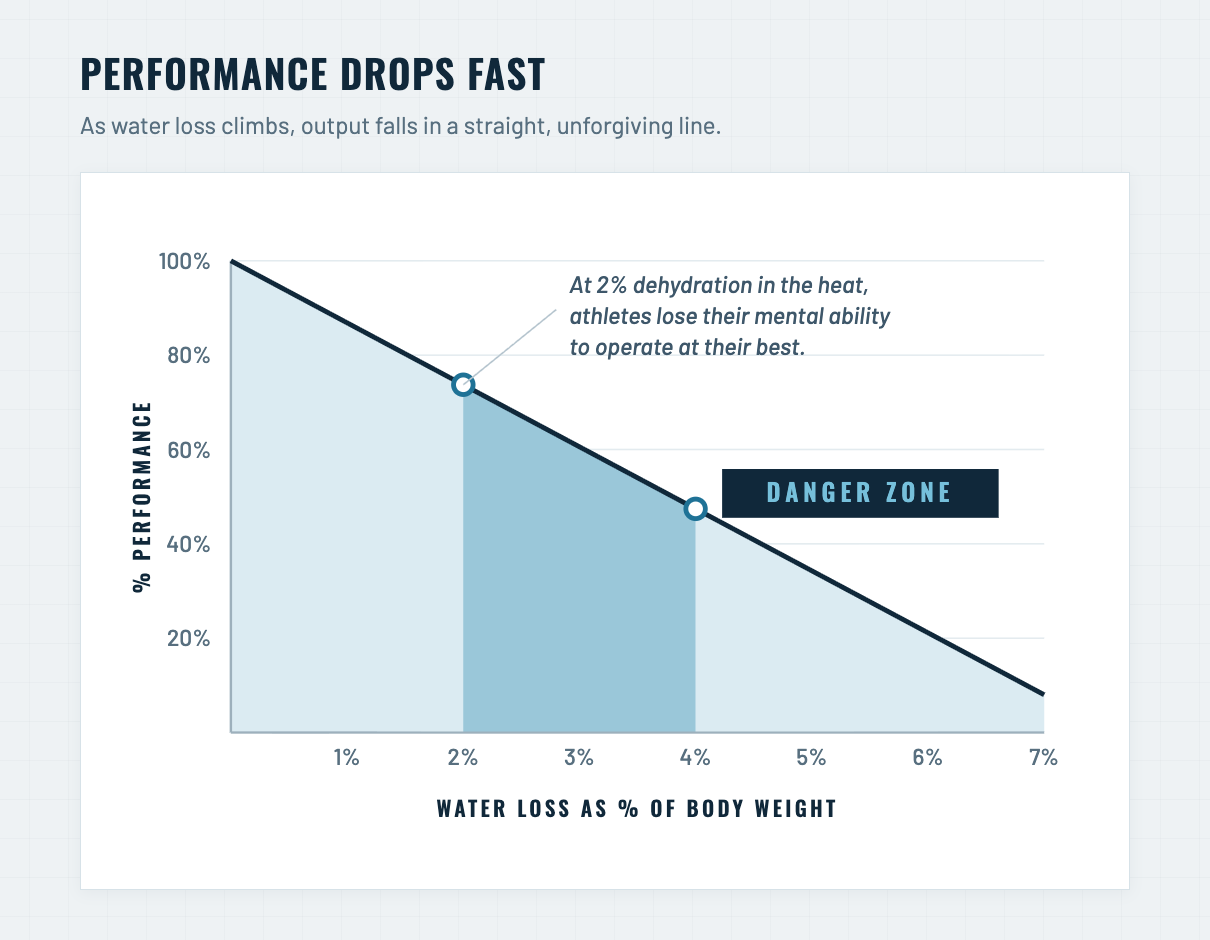
Source: American College of Sports Medicine, hydration & fluid-replacement guidelines for athletes.
Why a global tournament makes it harder
The challenge compounds during international competition. Players arrive off long flights, push through time-zone shifts and disrupted sleep, and carry wildly different levels of heat acclimatization. A squad built in the cool, damp conditions of Northern Europe is suddenly asked to perform in temperatures topping 90°F (32°C) with stifling humidity. The body can adapt — but acclimatization takes days to weeks, and a World Cup schedule rarely grants that runway.
This is why hydration is no longer a matter of drink water at halftime. Modern performance teams build individualized hydration plans: pre-match fluid assessments, body-weight monitoring before and after play, targeted electrolyte replacement, and structured recovery protocols once the final whistle blows. Some go further still, measuring each athlete's sweat rate and sodium concentration to tailor recommendations down to the individual.
Where the pharmacist comes in
This is the layer most fans never see, and it's exactly where a sports pharmacist earns their keep. Certain medications and supplements quietly raise the risk of dehydration and heat-related illness. Stimulants prescribed for ADHD, diuretics, heavy caffeine intake, and some weight-loss products can impair the body's ability to regulate its own temperature or accelerate fluid loss. Evaluating those risks — and reconciling them against an athlete's training load and the forecast — is precisely the kind of medication oversight that protects players before a problem ever surfaces. It's the work we do every day at Hockaday Rx and it's why pharmacist-led care belongs on every performance team.
The breaks aren't a nuisance — they're prevention
It's fair to say a cooling break can feel unnecessary during a mild evening match. But the value becomes obvious the moment temperatures climb. Heat illness exists on a spectrum — from mild heat cramps, to heat exhaustion, to potentially fatal exertional heat stroke. The CDC's guidance on heat-related illness makes the stakes plain: these conditions are serious, and they are largely preventable. Scheduled chances to cool down and rehydrate are a proactive measure built to stop the spectrum from ever escalating. (For more on how we approach prevention over reaction, see our perspective on proactive athlete wellness.)
The game behind the game
The thrill of the World Cup is a reminder of why this is the world's sport. But behind every spectacular goal, every last-ditch tackle, every dramatic comeback is an athlete managing two opponents at once — the eleven across the pitch, and the physiological toll of competing in extreme conditions. As the tournament drives toward the knockout rounds and the deepest heat of summer, hydration may prove every bit as decisive as tactics, talent, and teamwork.
Hockaday Rx is a performance sports pharmacy and wellness practice based in Inglewood, California, helping athletes and active people perform, recover, and stay well. Learn more about our approach.
#HockadayRx #SportsPharmacy #AthleteHydration #WorldCup2026 #SportsMedicine #HeatIllnessPrevention #Electrolytes #PharmacistLed #PerformanceHealth